Care That Goes Above and Beyond
When it comes to Palliative Care, many people think it’s only for the final stages of life. In reality, palliative care is about helping people live as well as possible by providing support, comfort, and guidance for individuals and their families. It focuses on quality of life, ensuring people can make informed choices and access the care they need at every stage of their journey.
For people across Melbourne’s eastern suburbs, Eastern Palliative Care (EPC) is helping make that support more accessible. As the largest single provider and operating as a not-for-profit organisation of community-based palliative care services in Victoria, EPC delivers free, home-based care designed to support individuals living with life-limiting illnesses, as well as their carers and families
Radio Monash had the opportunity to sit down with Adele Braun, the Community Engagement Lead at EPC and talk more about the importance of framing palliative care in a positive and empowering light – helping people feel informed and supported at all times.
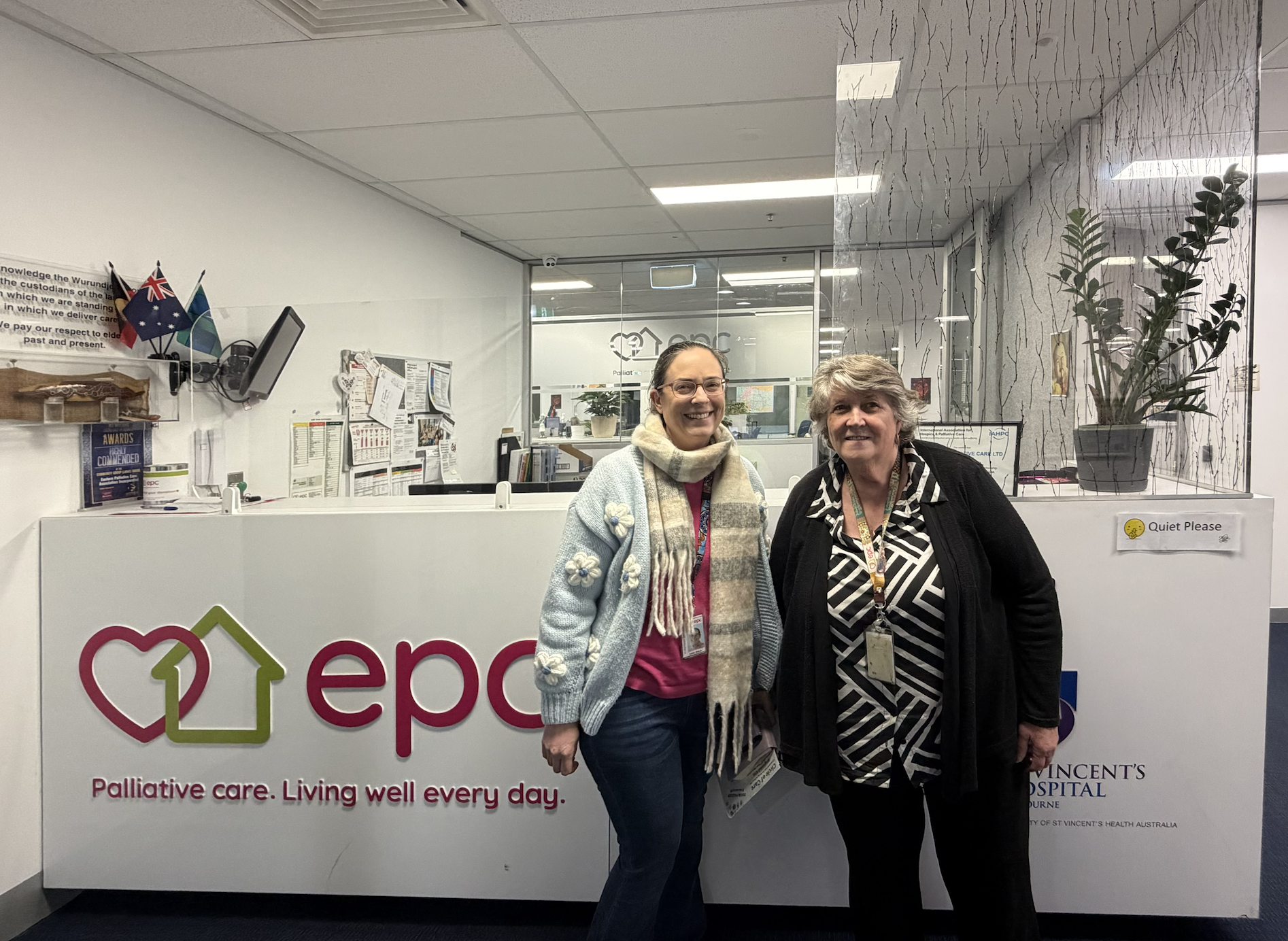
Adele Braun (Left) and Sally Hodgson (Right) at Eastern Palliative Care.
Image taken by Selin Duran
At EPC, clinical care is at the forefront of their services; their palliative care-trained volunteers make all the difference in the day-to-day experiences of patients and families. From companionship and carer respite through Community Support and Smile Makers, to preserving personal stories through the Biography program, volunteers help enhance quality of life in many ways. Other initiatives include therapy dog visits through Palliative Paws, handmade comfort items from Hugmakers and Comfort Cushions, hairdressing services, bereavement support, community education programs and multilingual assistance for biography projects.
One of the most valued services offered by EPC is its 24/7 support line, which connects patients and families with highly trained palliative care nurses when they need help most. For many carers, having access to expert advice around the clock can make an enormous difference.
"Having that on-call service meant that they didn't have to call an ambulance. They didn't have to rush to emergency," Adele explained.
Instead, families are often able to manage situations at home with guidance from experienced nurses. "Having access to that support was just phenomenal."
The service exists because, as EPC staff know, serious illness does not follow a schedule. "Crisis doesn't wait for office hours." Said Nicole Murphy, Clinical Services Lead.
Beyond clinical support, EPC's volunteers play a vital role in helping people feel connected and supported. One of the organisation's most unique initiatives is its Biography Program, where trained volunteers help patients document their life stories, memories and experiences for loved ones.
Reflecting on the program, Adele recalled a volunteer’s experience on a biography visit and was reminded of a simple but powerful truth: "Everyone has a story."
What began as a conversation with a patient who believed he had little to share soon revealed a lifetime of experiences, memories and lessons. The process not only created a treasured keepsake for his family but also highlighted the importance of preserving personal histories.
"Those memories, those stories, they die when you die if no one has a record of them," the volunteer said.
Beyond its direct services, EPC is also committed to raising awareness about palliative care and encouraging conversations that many families find difficult to start. Through community events and outreach programs, the organisation aims to help people better understand the support available to them and the importance of planning ahead.
"It's just knowing what options there are out there and where to go," Adele said.
"You can find a lot of stuff out online, but all the pieces don't always come together as simply."
Through services like the Biography Program, Community Support, Palliative Paws and its 24/7 nursing line, EPC aims to ensure that people facing life-limiting illness can continue to live with dignity, connection and comfort.
At its heart, palliative care is about more than medical treatment. It is about helping people live well, supporting families through difficult times, and creating opportunities for meaningful conversations. As EPC continues its work across Melbourne's eastern suburbs, it is also encouraging the broader community to start talking about death, dying, and care planning earlier, before a crisis arrives.
To keep up with the amazing work that they do EPC is also helping to bring conversations about palliative care into the community through a series of upcoming events. As part of Dying to Know Day, a national initiative that encourages open and informed discussions about death, dying and end-of-life planning, EPC is hosting the Circle of Care Community Expo. The free event will connect attendees with healthcare providers, support services and community organisations, offering practical information on topics ranging from aged care and advance care planning to bereavement support and living well with a terminal illness. By creating a welcoming space to ask questions and access reliable information, the expo aims to help people feel more confident navigating future care decisions.
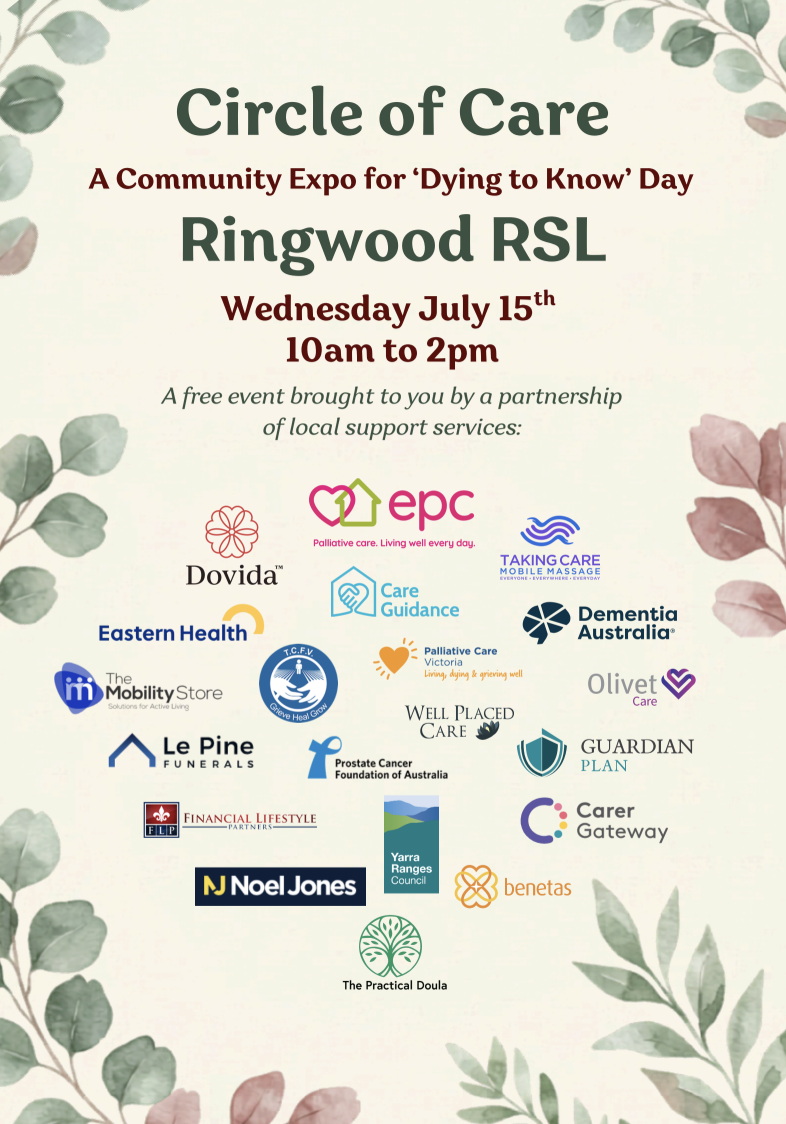
Flyer on Circle of Care Expo
Supplied by EPC
Community members can also join a free online wellbeing conversation, Living Well at Home with a Terminal Illness, on 23 July from 7 pm to 8 pm. Presented by EPC Clinical Nurse Consultant Nicole Murphy in partnership with Boroondara, Monash and Maroondah councils, the session will explore how people can maintain comfort, independence and quality of life while receiving care at home. The event is designed to provide practical advice and reassurance for individuals, carers and families navigating serious illness. So Register Now!!