A Window Into REUNION: New Documentary Short
What happens when only ten people show up to a ten-year high school reunion?
That question became the starting point for Reunion, a new short documentary by filmmaker Chloe Taylor that premiered at the Melbourne Documentary Film Festival on July 11 at Cinema Nova.
This 21-minute film explored why only ten people from Taylor’s all-girls Catholic College attended the ten-year reunion. Seeking answers, she began reaching out to former classmates, uncovering a series of candid and often vulnerable conversations about identity, self-perception, social comparison and the complicated relationship people have with their past selves.
For filmmaker Chloe Taylor, Reunion represents a significant step in her creative journey. While she has spent much of her career working in creative agencies and commercial film production, her role was often focused on the business and production side of storytelling rather than developing her own creative projects.
Taylor began pursuing documentary filmmaking independently in 2022 with a feature-length project that remains in development. However, recognising that independent feature documentaries can take many years to complete, she was drawn to the idea of creating a shorter project that would allow her to see a story through from conception to audience release in a much shorter timeframe.
The idea for Reunion emerged from a collection of story concepts she had been developing and a lingering curiosity about her former high school's ten-year reunion. When only a small number of alumni attended, Taylor began questioning why 160 of the girls chose not to return. What started as a personal curiosity soon evolved into a broader exploration of identity, societal expectations and the milestones people use to measure their lives.
Through the documentary, Taylor investigates how individuals assess themselves against traditional markers of success and the paths they feel they are expected to follow. The film uses the reunion as a lens to examine larger questions about belonging, personal growth and the ways people navigate the gap between who they once were and who they have become.

Chloe Taylor: Director of REUNION
Image supplied by Chloe Taylor
Why does the past still matter?
Through conversations with former classmates, Taylor found that high school continues to shape people in ways that are both visible and invisible long after graduation. While many felt as though they left part of their teenage self behind, Reunion revealed how certain perceptions can linger into adulthood.
“There’s so much that we can look at from our teen years and kind of leave behind and say, ‘That’s no longer me.’ But I think some carry into the present day, both positive and negative.” Taylor said.
One of the recurring themes in Reunion is the fear of returning to old social environments and being viewed through the same lens as a teenager. Taylor noted that some former students were hesitant to attend because they worried that familiar dynamics would resurface.
“There’s people who didn’t attend the reunion because there was anxiety around, ‘I don’t want to walk into that room and have that same dynamic exist,’” she said.
While leaving school often brings the realisation that many of its social rules no longer apply, Taylor found that returning to those spaces can still provoke uncertainty and self-reflection.
“You might have identities that were prescribed to you fall away once you leave high school,” she explained. “But I guess there is a fear of, ‘If I return, am I going to get labelled or viewed in the same way?’”
For Taylor, the unusually low turnout at the reunion became a way of investigating broader questions about identity, growth and belonging. The film ultimately asks how much power people have to redefine themselves and whether the judgments they fear from others still exist at all.
“The fact that only ten people showed up is an interesting thing to investigate,” Taylor said. “There are probably a lot of very interesting reasons and stories that I haven’t uncovered.”
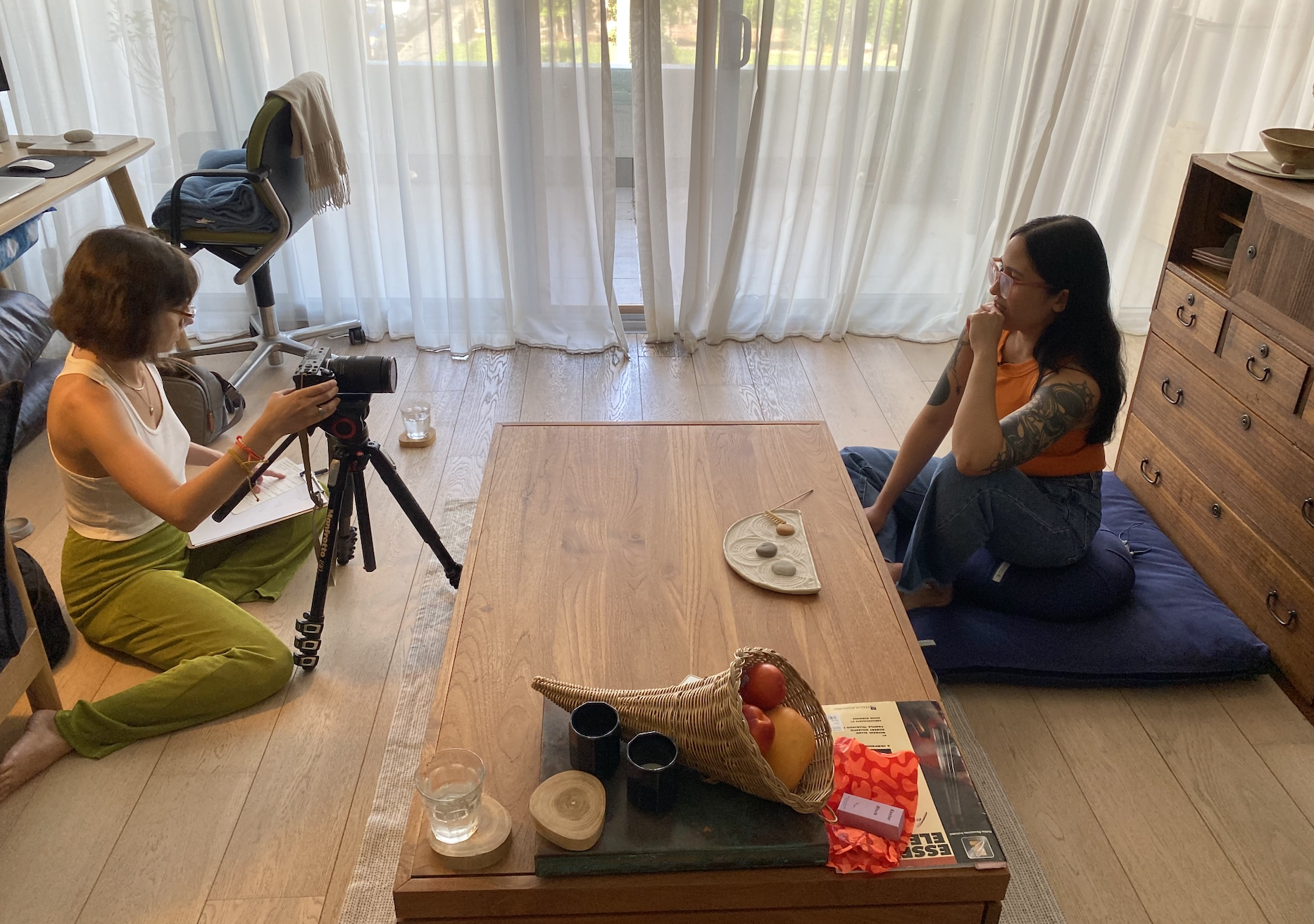
During the filming process, Image supplied by Chloe Taylor
Social Media, Milestones and the Pressure to Measure Up
A key theme explored in REUNION is the role social media plays in shaping how people perceive both themselves and others. Taylor believes platforms have fundamentally changed the way people keep track of their peers, creating new pressures around achievement, life milestones and self-presentation.
While acknowledging that every generation engages with social media differently, Taylor said millennials occupy a unique position, having witnessed the rapid evolution of online culture firsthand.
“I think each generation treats social media slightly differently,” she said. “It’s interesting being part of the millennial cohort and seeing the different nuances of the way that we’ve used social media and how that has changed and shifted over time.”
Taylor argues that the design of social media platforms can amplify feelings of comparison. Algorithms often prioritise highly engaging content, meaning major life events such as engagements, marriages, home ownership, career achievements and children are more likely to appear prominently in people's feeds.
“The algorithm rewards high engagement,” she explained. “Every time somebody gets engaged, gets married, has a baby, buys a house or reaches some big milestone, that ends up in everybody’s feed by default.”
As a result, people are frequently exposed to curated snapshots of success, which can shape expectations about what a life should look like after ten years. For some, this can make reunions feel intimidating, particularly if their own experiences do not fit neatly into conventional milestones.
“If your life isn’t as easy to put into boxes, that can be a confronting thing,” Taylor said. “How do I explain what I’ve done? Are these people just going to think that I’ve been sitting around for ten years?”
The documentary highlights how social media often presents a simplified version of reality. While platforms can help people stay connected, they rarely capture the complexities, uncertainties and challenges that exist behind the scenes.
“It’s a highlights reel,” Taylor said. “People show all of their happy times. Not everybody uses social media to show the harder moments, and neither is right or wrong.”
For Taylor, this raises an important question about what people are really seeking when they reconnect. While social media may provide an overview of someone’s accomplishments, face-to-face conversations offer the possibility of deeper understanding and vulnerability. However, that potential depends on whether people are willing to move beyond surface-level updates.
“There’s the opportunity to speak to people in real life and see the behind-the-scenes,” she said. “But there is also the risk of showing up to a reunion and walking away with the same information you could have obtained from social media – just people’s accomplishment lists.”
Reunion is a thoughtful and engaging documentary that turns a simple question into a wider conversation about identity, social media and personal growth. Through honest storytelling, Chloe Taylor offers a fresh perspective on the ways we compare ourselves to others and reflect on our past. With this impressive Australian premiere, Taylor has established herself as a filmmaker worth following, and audiences should keep an eye on what she creates next. To follow along with the Reunion journey, follow @highschoolreunionfilm on Instagram.
The final question remains: Would you go to your high school reunion?