The Era of Recession… Again?
A Recession in Australia
The operational definition of a recession, often referred to as a ‘technical recession’, describes a period in which an economy experiences two consecutive quarters of negative growth in real gross domestic product (GDP). Such periods are typically associated with rising unemployment, declining investment, and reduced consumer spending.
Australia’s last recorded recession was in 2020, amid the Black Summer bushfires and during the COVID-19 pandemic. Nationwide lockdowns resulted in widespread job losses, reduced working hours, and a rapid shift to remote work across many industries. Between March and April, an estimated 2.7 million people experienced job or work-hour losses, including 900,000 individuals who were employed in March but not employed in April. This significant disruption has had a major impact on the Australian economy, not only ending 29 years without a recession, but its effects continue to influence economic conditions today.
More recently, the Australian job market has shown signs of ongoing pressure, with a 5.0% decrease in online job advertisements recorded within the last month of 2026. From 2025, Australia is experiencing major occupation shortages with nearly half in trade roles and two in five professional occupations, specifically in health, education and construction. However, the ongoing job market issue isn't the only economic issue that Australia faces. This past year, Australia has been scrambling for fuel, with the overreliance on exported fuel and the ongoing war, petrol prices have skyrocketed. Between February and March alone, the price for Unleaded rose 31.8%, while Diesel rose by 40.1%. This left people scrambling for fuel in fear of it running out and causing widespread panic across the whole of Australia. By the end of March, it was recorded that over 500 service stations were depleted of supply across two major states. Whilst supply and demand issues are at the forefront of people's minds, the major question that arises is what would happen when fuel sources are exhausted, and how the economy would survive this feat.
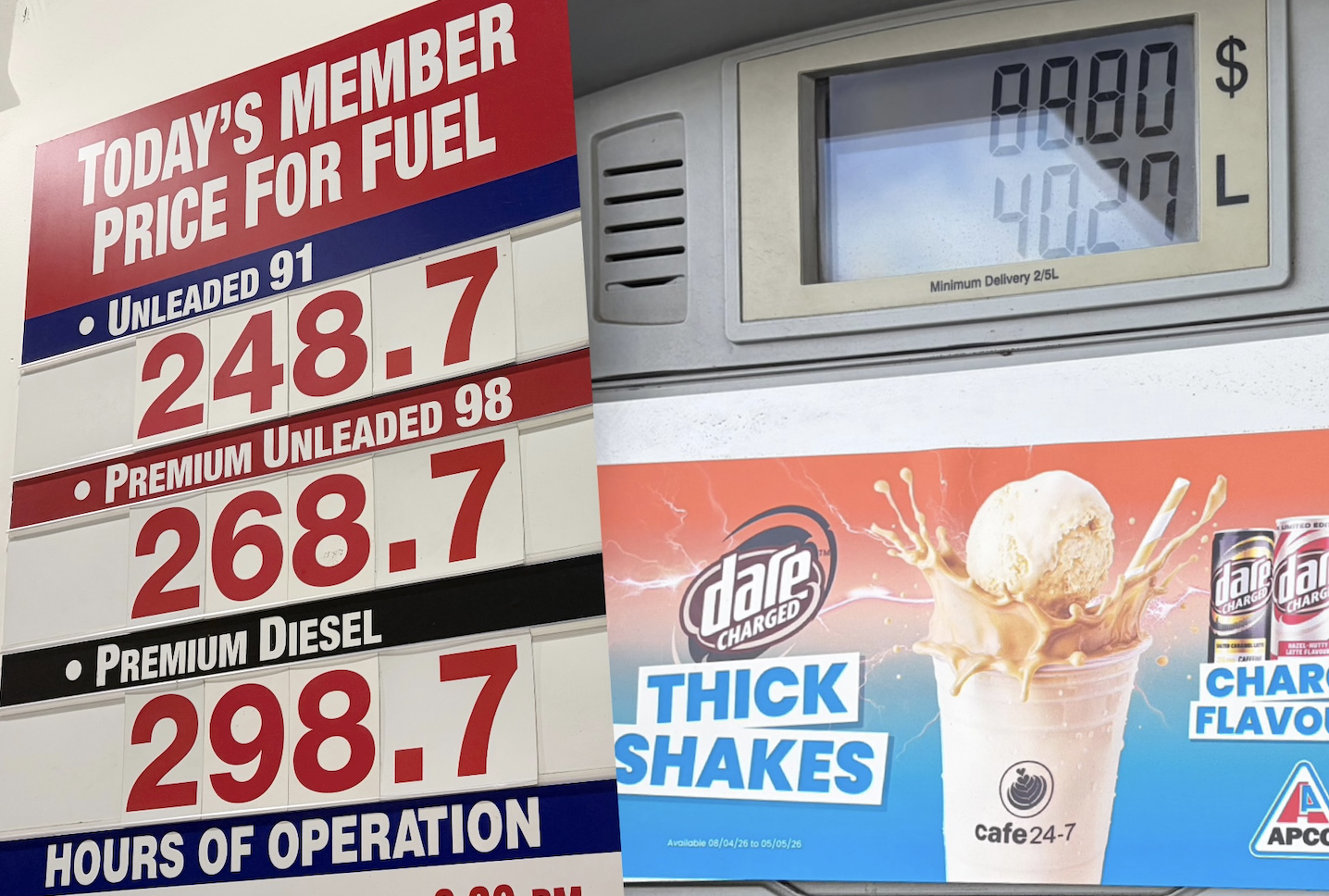
Price of Petrol (26/03/2026). Image supplied by Selin Duran
To combat this spike, the government introduced an excise duty rate reduction by 60.9% from April 1st to June 30th, 2026, which has significantly cut the prices of fuel; however, from July, it is unclear if the prices will remain stagnant or rise higher than before.
This raises obvious concerns for the economy and an important question: Is Australia in a recession?
The technical answer is no, but…
Does social media know that?
While conversations about the economy are not unusual on social media, the concept of a “recession indicator” is. A recession indicator/s are economic metric suggesting a significant and widespread decline in economic activity. The most common indicators are employment loss, triggering the Sahm Rule, falling consumer confidence, and the “Lipstick effect”. But it’s not clear whether the average social media personality knows that.
When looking at consumer confidence on a scale of optimism or pessimism, the Westpac-Melbourne Institute Consumer Sentiment Index released a bulletin that highlighted a major decline from 91.6 in March to 80.1 in April. This drop indicates that Australian shoppers are becoming more pessimistic about the economy, and the ‘cost of living crisis’ dictates their consumption trends, thus resulting in reduced overall spending.
The ‘cost of living’ shock can also transform into the “Lipstick effect”, a phenomenon where cosmetic expenditure increases in economic downturns. Typically, consumers continue to purchase luxury goods but shift towards smaller or more affordable indulgences, such as lipstick, hence the name. In the current economic climate, increased consumer demand and overspending have allowed the Lipstick effect to manifest through dupe culture, where consumers replace high-end luxury products with cheaper alternatives that offer similar performance. This shift reflects changing consumer priorities, as individuals seek to maintain a sense of luxury while managing tighter household budgets. However, while buying dupes seems like an affordable option, on TikTok and Instagram reels, it can be coined as a recession indicator.
In 2026, the term ‘recession indicator’ became a popular hashtag with over a million videos related to what they believe is a sign of recession. One major category is dupe culture. Everyday items such as perfumes are now a recession indicator (according to TikTok). For example, take a 50ml perfume from Palermo, while best known for being a company that is inspired by luxury brands, this item is an affordable way to smell good and thus a recession indicator, as people can’t buy the real thing. However, this is an idea cemented by social media; people don’t necessarily buy from this brand because they cannot afford it. Palermo’s perfumes generally smell really good and sometimes have a longer wear than their luxury counterparts. So why do we still think that?
“Influencers” are a large part of the issue. Social media influencers have the power to shape attitudes and distort the reality of the economy. By labelling something as a “recession indicator”, there is a false sense of pessimism that spreads online without any real substance or research behind it. The average social media consumer uses online platforms to entertain and connect with others; they don’t overanalyse trends as negative or positive to society. They analyse trends as possible viewership opportunities and platforms for individual growth and personal wealth.
According to influencers:
‘The rise of skinny tok’
‘Beyonce tickets not selling’
‘A man stealing a woman’s purse’
‘Lesbians getting with straight men’
‘Going on a date because a sugar daddy isn’t enough’
Are all recession indicators.
A personal favourite is not being sure if ‘[a] lack of crash outs is a sign of growth or recession indicator’
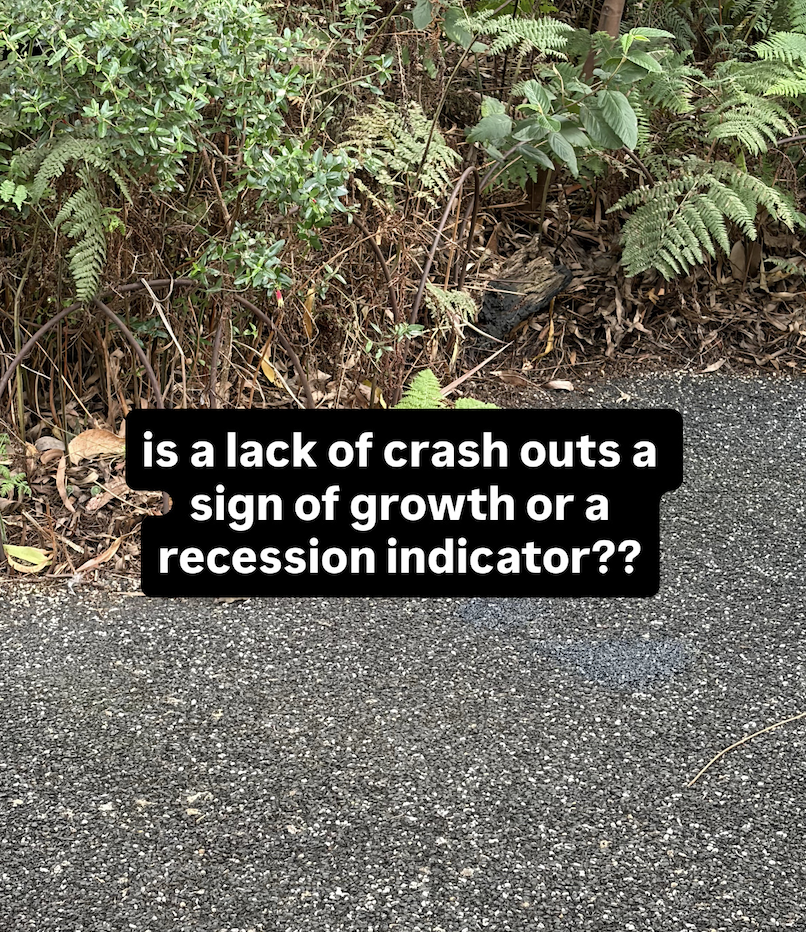
Recession Indicator Trend. Image supplied by Selin Duran
While most of these are said to be humorous, this indicates a lack of understanding when it comes to recession or conversations around it. Social media demonstrates that trend culture distorts consumption patterns tenfold and cannot be a reliable indicator of recession. While this issue of declining economic growth in Australia is concerning, it is not something that a single individual can “fix”. To prevent a recession in Australia, the Australian government and the Reserve Bank of Australia need to make policy adjustments to maintain economic sustainability.
In the meantime, stop buying into social media trends and don’t fall into the recession indicator rabbit hole.
References
Amirthalingam, J., & Khera, A. (2024). Understanding social media addiction: A deep dive. Cureus, 16(10). https://doi.org/10.7759/cureus.72499
Australian Taxation Office. (2026, April 26). Excise duty rates for fuel and petroleum products. Www.ato.gov.au. https://www.ato.gov.au/businesses-and-organisations/gst-excise-and-indirect-taxes/excise-on-fuel-and-petroleum-products/excise-duty-rates-for-fuel-and-petroleum-products
Chung, F. (2026). Australia petrol prices rise fastest in developed world since Iran war. News.com.au. https://www.news.com.au/finance/economy/australian-economy/australia-petrol-prices-rise-fastest-in-developed-world-since-iran-war/news-story/7a3cfd9917d0c950ff118dd3fefa8c7f
Hannaford, P. (2026, March 25). More than 500 petrol stations out of fuel in Vic and NSW. Sky News; Sky News Australia. https://www.skynews.com.au/australia-news/more-than-500-service-stations-across-nsw-and-victoria-have-run-out-of-fuel-as-supply-crisis-worsens/news-story/732f1c76f9f8c5612c6e9d9e66a98be3
Hassan, M. (2026, April 13). Consumer sentiment crashes. Westpaciq.com.au; Westpac IQ. https://www.westpaciq.com.au/economics/2026/04/consumer-sentiment-april-2026
Janda, M. (2020, June 3). Australia is in first recession in 29 years after avoiding “economic Armageddon.”Www.abc.net.au. https://www.abc.net.au/news/2020-06-03/australian-economy-gdp-recession-march-quarter-2020/12315140
Job ads down 5% nationally in February 2026. (2026, March 18). Jobs and Skills Australia. https://www.jobsandskills.gov.au/news/job-ads-down-5-nationally-february-2026
MacDonald, D., & Dildar, Y. (2020). Social and psychological determinants of consumption: Evidence for the lipstick effect during the Great Recession. Journal of Behavioral and Experimental Economics, 86(101527), 101527. https://doi.org/10.1016/j.socec.2020.101527
People who lost a job or were stood down: flows analysis, April 2020 | Australian Bureau of Statistics. (2020, May 14). Www.abs.gov.au. https://www.abs.gov.au/articles/people-who-lost-job-or-were-stood-down-flows-analysis-april-2020
Reserve Bank of Australia. (2025). Recession. Reserve Bank of Australia. https://www.rba.gov.au/education/resources/explainers/recession.html
Sahm, Claudia. (1959, December 1). Real-time Sahm Rule Recession Indicator. FRED, Federal Reserve Bank of St. Louis. https://fred.stlouisfed.org/series/SAHMREALTIME
Shortages ease but gaps persist in 2025 Occupation Shortage List. (2025, October 15). Jobs and Skills Australia. https://www.jobsandskills.gov.au/news/shortages-ease-gaps-persist-2025-occupation-shortage-list